 Urban Chimney ProsUrban Chimney Pros
See what's up your chimney.
A chimney sweep in Colorado Springs keeps your flue clear of creosote and confirms the whole system is safe to burn. We clean, inspect, and repair chimneys for wood-burning fireplaces, gas fireplaces, and wood stoves across El Paso County, from Broadmoor to Stetson Hills. Search a chimney sweep near me and you want someone who shows up, answers the phone, and gives you a straight ballpark before any work starts — that is how we run every visit.
Call (719) 353-7903
Tell us about your chimney sweep job — we'll get you a fast quote.
A firm, all-in price confirmed before we start — no surprises.
On time, done to standard, and tidy when we leave.
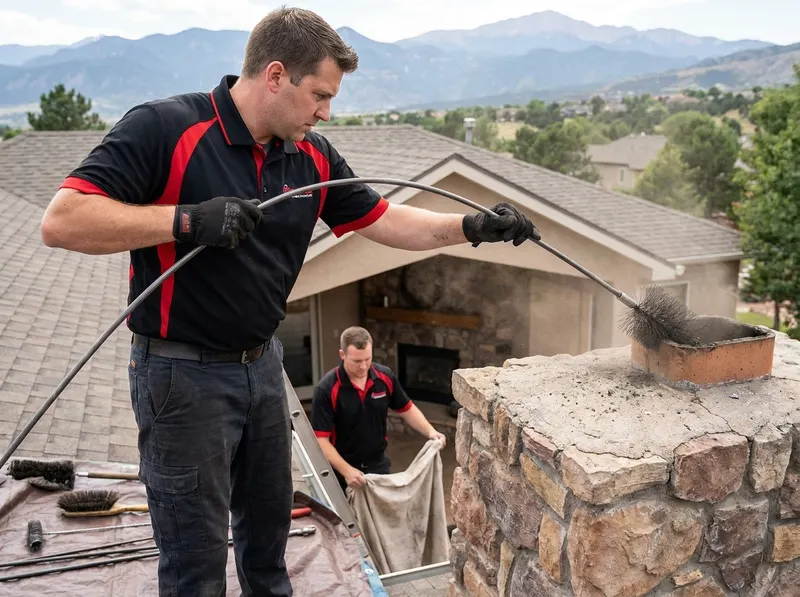
Full sweep of a wood-burning fireplace flue — we brush and vacuum creosote and soot from the firebox to the cap, then check the damper and smoke chamber for buildup and blockages. Creosote is the sticky, flammable residue wood smoke leaves on flue walls, and it is the single biggest cause of chimney fires. This is the annual service most Colorado Springs wood-burners need to prevent chimney fires and restore a clean, strong draft. We lay down drop cloths, run a HEPA vacuum at the firebox, and sweep so the room stays clean while we work.
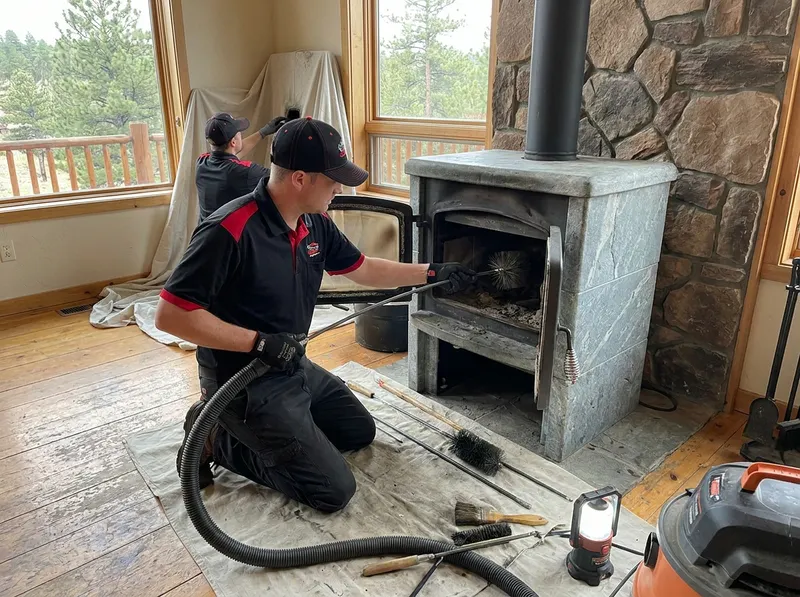
Freestanding wood stoves and fireplace inserts burn hotter and build glazed creosote faster than an open fireplace. We clean the stove pipe, connector, and liner, clear the baffle, and confirm the insert is drafting right. Glazed creosote is a hardened, tar-like layer that a standard brush alone won't remove, so we check for it every visit — common in Rockrimmon and Peregrine homes running high-efficiency stoves all winter. A stove that's slow to light or backs smoke into the room usually needs this cleaning first.
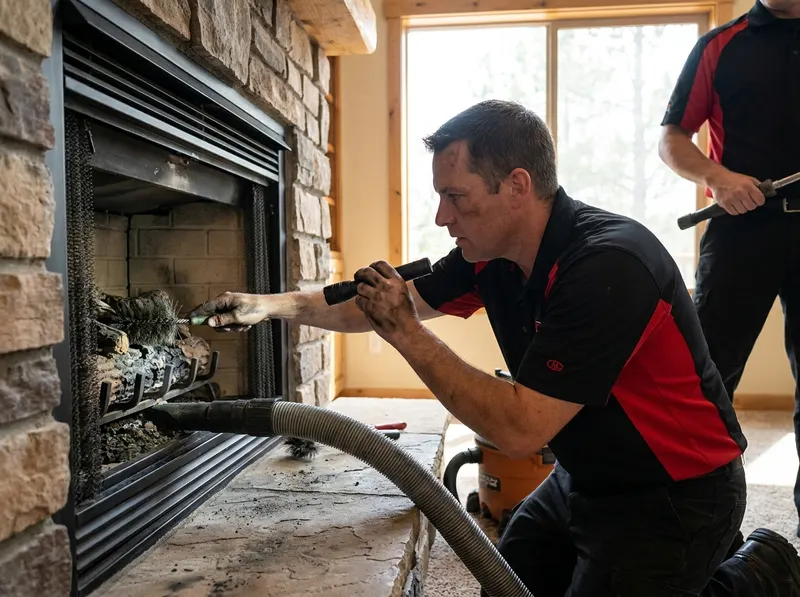
Gas fireplaces still need annual attention even though they burn clean. We clean the burner, logs, glass, and venting, check the pilot and igniter, and clear the flue of debris and cobwebs that block the vent. A gas unit that won't light, cycles off, or smells off gets a full service check before winter. Dust and pet hair collect on the burner ports over a season and cause weak or uneven flames, so a yearly service keeps the fire lighting on the first try.
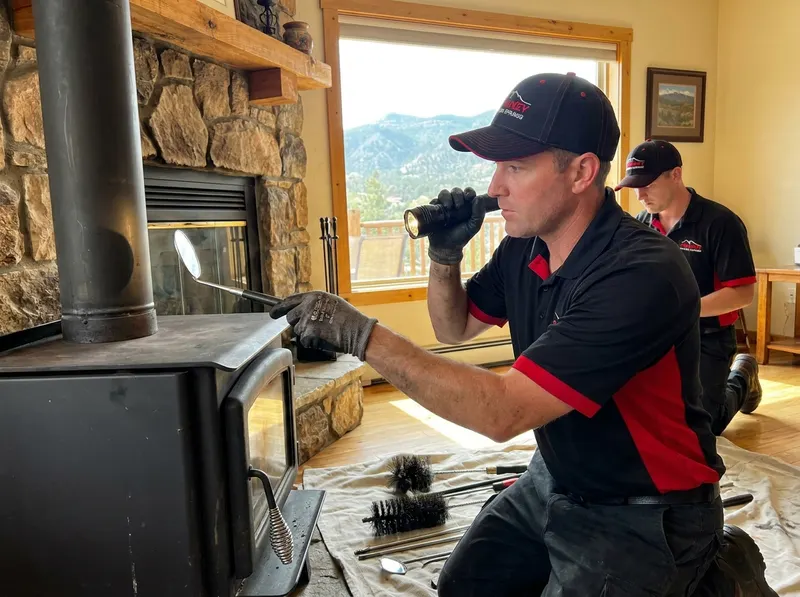
The standard annual inspection: we visually check the readily accessible interior and exterior of the chimney and flue for soundness, blockages, and creosote. A Level 1 is right for a fireplace in continuous use with no known changes or problems. It confirms the flue is clear, the cap and crown look sound, and there's no obvious deterioration before you burn again. We walk you through what we see and point out anything worth watching.
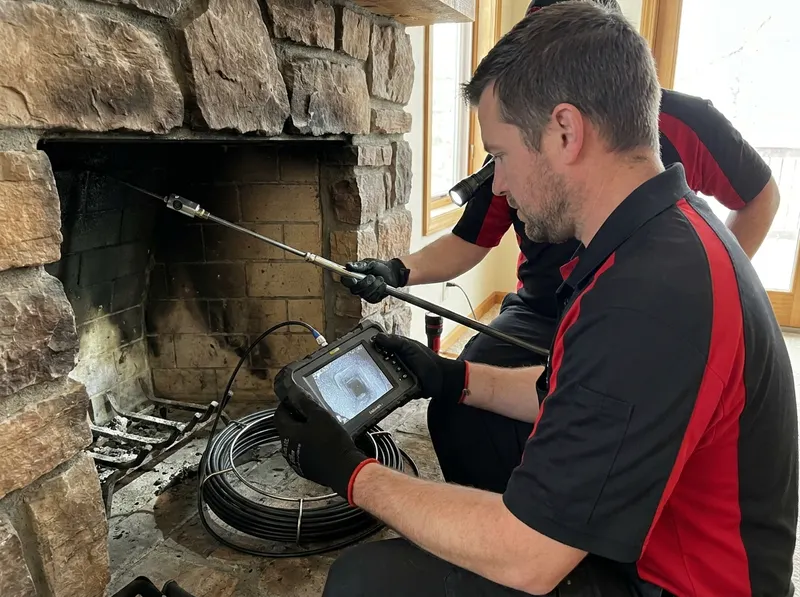
A camera-scoped inspection that records the full flue on video — required for real estate sales, after a chimney fire, and after any system change like a new stove or liner. This is the inspection to book when buying a home in Colorado Springs so hidden liner cracks and past fire damage show up before closing. The camera reaches every joint and offset a flashlight can't, and you get to see the footage yourself so nothing is taken on faith.
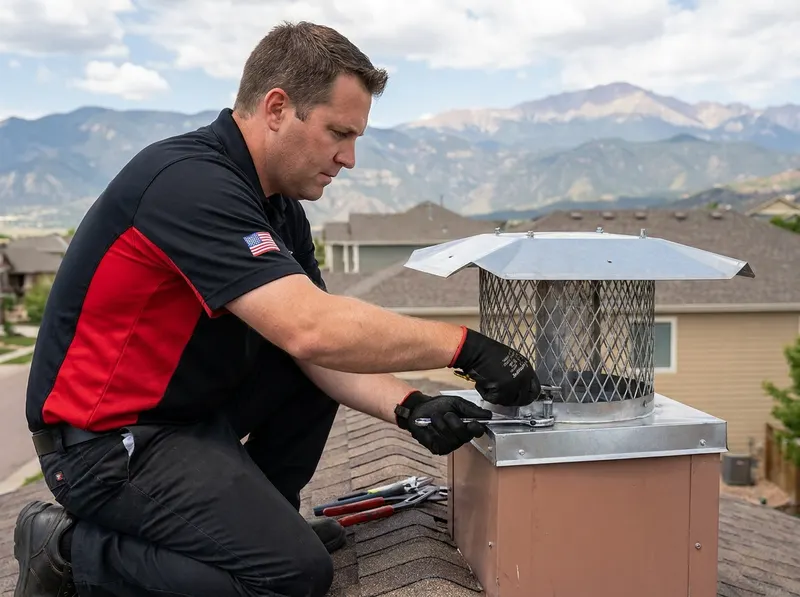
We replace missing or rusted chimney caps and repair or replace damaged dampers. A proper cap keeps out rain, snow, birds, and squirrels — a real issue near Palmer Park and Cheyenne Cañon where wildlife nest in open flues. A working damper seals the chimney when the fireplace is idle so you're not heating the outdoors all winter. Rusted, stuck, or missing hardware is one of the most common things we find on an annual sweep, and it's usually an easy same-visit fix.
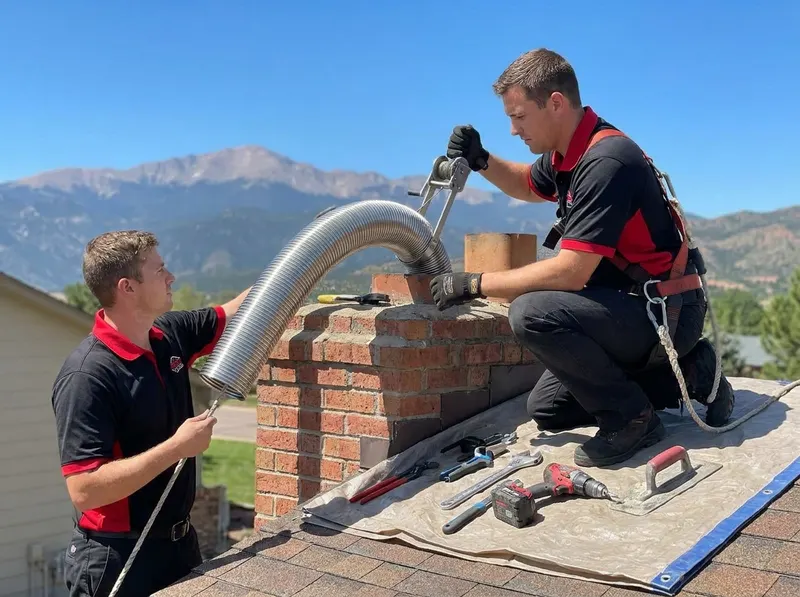
Cracked or deteriorated flue liners let heat and combustion gases reach nearby framing, which is a genuine fire and carbon-monoxide risk. We assess clay-tile and metal liners with a camera and repair or reline as needed so the chimney meets code and vents safely. Older Colorado Springs homes often have original clay-tile liners that crack over decades of freeze-thaw and hard burning. Reline cost depends heavily on the chimney's height and how many offsets it has, so we scope it first and give you the number before any work begins.
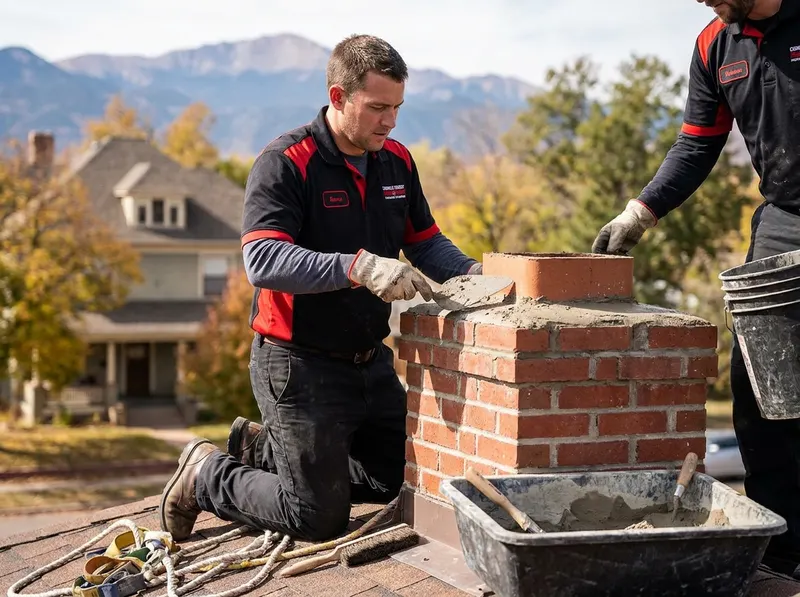
Colorado Springs freeze-thaw cycles crack chimney crowns and spall brick faster than in milder climates. The crown is the concrete slab at the top of the chimney that sheds water away from the flue; when it cracks, water gets into the masonry and the freeze-thaw pulls it apart. We repair crowns, repoint mortar joints, and seal masonry to stop water intrusion before it reaches the flue and firebox. Fixing water at the top first protects everything below it, including a new liner.
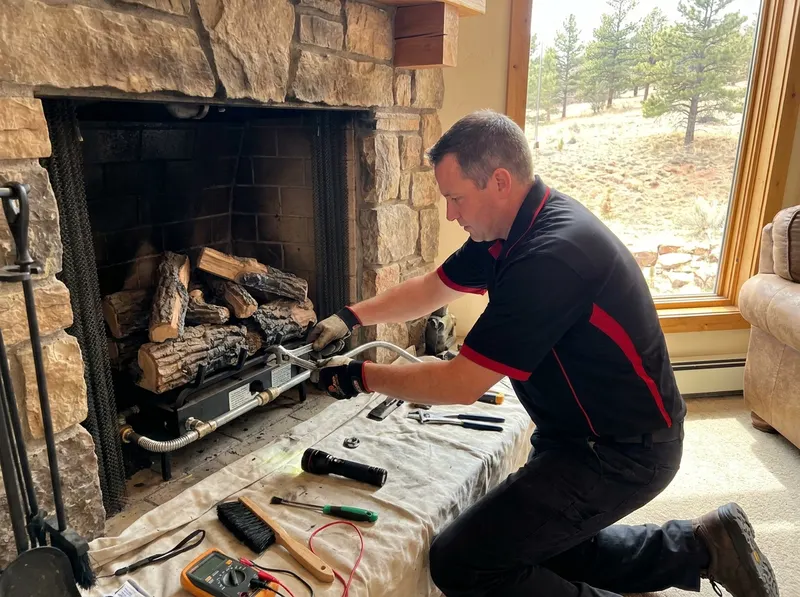
Converting a wood-burning fireplace to gas logs takes the cleaning, ash, and wood-hauling out of your winter. We walk you through venting requirements, gas line access, and whether your existing firebox and flue suit a conversion before quoting anything. A conversion suits homeowners who love the look of a fire but are tired of the maintenance and mess. We'll tell you honestly on-site whether your setup is a straightforward conversion or needs more work first.
If you burn wood a few times each winter, a standard sweep plus a Level 1 visual inspection covers you — it removes the season's creosote and confirms the flue is clear. If you burn heavily, run a wood stove, or smell smoke that won't draft, add a Level 2 camera inspection so we can see glazed creosote and hidden cracks inside the flue. If you're buying a home anywhere from the Old North End to Springs Ranch, get the Level 2 camera inspection regardless of what the listing says — a fireplace that looks fine can hide a cracked liner. The trade-off is straightforward: a visual inspection is faster and cheaper but only sees what's reachable, while a camera inspection costs more and takes longer but documents the full flue on video. If your chimney takes on water or the crown is cracking, choose masonry and crown repair before you reline — sealing the water out first keeps the new liner from failing early. If you want to keep burning wood, invest in the liner or masonry repair and keep the fireplace you love; if you'd rather stop hauling wood and cleaning ash, a gas log conversion is the lower-maintenance route. The general rule: match the level of inspection to how hard you burn, and fix water intrusion before you fix anything inside the flue. When you're unsure which fits, text a photo of your firebox and we'll tell you honestly what the chimney actually needs.
| On-site minimum charge (any visit) | from $150 |
| Standard wood chimney cleaning + Level 1 inspection | $150 – $325 |
| Second flue on same visit | $150–$175 |
| Wood stove / insert cleaning | $195 – $375 |
| Glazed creosote removal (add-on) | $150–$400 |
| Gas fireplace cleaning & service | $175 – $350 |
| Level 2 video camera inspection | $250 – $500 |
| Pre-sale real estate inspection | $250 – $500 |
| Chimney cap replacement | $250 – $650 |
| Damper repair / replacement | $225 – $700 |
| Crown repair | $400 – $1,200 |
| Crown & minor masonry / repointing | $400 – $1,600 |
| Waterproofing / masonry sealing | $250 – $600 |
| Flue liner repair / reline (varies by height) | $1,500 – $4,500 |
| Gas log conversion (parts vary) | $650 – $3,000 |
Your exact price is confirmed before any work begins.
Colorado Springs sits above 6,000 feet with dry air and sharp overnight temperature swings, and that elevation changes how a chimney drafts — cold, thin air at the top of Skyway or Peregrine can stall a flue and push smoke back into the room until the chimney warms up. Priming the flue with a rolled newspaper or a few minutes of warm air before lighting is often all it takes to get a cold, high-elevation chimney drafting, and it's the first thing we show homeowners who complain their fireplace smokes on start-up. The same freeze-thaw cycle that shales rock in Garden of the Gods works on chimney crowns and mortar joints, so masonry that looked fine last spring often shows cracks by the next heating season — which is why we scope the crown as closely as the flue. Older homes in the Old North End and Old Colorado City frequently have original clay-tile liners that deserve a camera inspection before another winter of hard burning, and homes tucked into Cheyenne Cañon and along Palmer Park see more animal intrusion into open flues than the newer builds out in Briargate and Springs Ranch. Fall wind and afternoon storms rolling off Pikes Peak also drive rain and snow into uncapped chimneys, so a good cap earns its keep here.
Neighborhoods we cover: Broadmoor, Old Colorado City, Briargate, Rockrimmon, Old North End, Stetson Hills, Skyway, Cheyenne Cañon, Peregrine, Springs Ranch.
A standard chimney cleaning with a Level 1 inspection in Colorado Springs typically runs $150 to $325. Our on-site minimum is $150 for any visit, and heavier jobs like wood stoves, camera inspections, or repairs price higher. These are honest ballparks — the exact price is confirmed during a free on-site look before we start any work.
Once a year for any fireplace or stove in regular use. The Chimney Safety Institute of America recommends an annual inspection, and a cleaning whenever creosote has built up. Colorado Springs wood-burners who use their fireplace all winter should book in early fall, before the September-to-November rush, to avoid the wait. Heavy burners running a stove nightly may need cleaning more than once a season.
Yes — a Level 2 video camera inspection is a smart move before closing on any Colorado Springs home with a fireplace. A camera scope shows cracked liners, hidden blockages, and past chimney-fire damage that a standard home inspection and a flashlight will miss. It protects you from inheriting a repair the seller never disclosed, and the video gives you documentation to negotiate with.
In many cases, yes. A gas log conversion removes the cleaning and hauling from your winter routine. Whether your Colorado Springs fireplace suits a conversion depends on the venting, firebox condition, and gas line access — we assess all three on-site and give you a straight answer before quoting.
We service both. Gas fireplaces across Colorado Springs still need annual attention — cleaning the burner, logs, and glass, checking the pilot and igniter, and clearing the vent. If your gas unit won't light, cycles off, or smells off, that's the visit to book before the cold sets in.
A standard wood-fireplace cleaning and Level 1 inspection in Colorado Springs usually takes about 45 minutes to an hour and a half. A wood stove with glazed creosote or a Level 2 camera inspection takes longer. We lay down drop cloths and run a HEPA vacuum so the work stays clean, and we walk you through what we found before we leave.
At Colorado Springs elevation, a cold flue full of dense air can stall the draft and push smoke back into the room until the chimney warms up. Priming the flue with a little warm air before lighting usually fixes a smoky start-up. If smoke keeps coming back after the fire is going, the cause is more often a blocked flue, a closed or stuck damper, or creosote buildup — all things we check on a sweep.
Yes. A chimney cap keeps rain, snow, birds, and squirrels out of the flue, and it's especially worth it near Palmer Park and Cheyenne Cañon where wildlife nest in open chimneys. It also blocks the wind-driven rain and snow that blow off Pikes Peak during fall storms. A cap is an inexpensive part that prevents water damage, animal nests, and blockages that cost far more to fix later.
Glazed creosote is a hardened, tar-like layer of creosote that builds up when wood burns slow and cool, and it is highly flammable. Colorado Springs wood stoves and inserts run hot and closed down, which builds glazed creosote faster than an open fireplace. A standard brush won't remove it — it needs specialized treatment, which we assess and price on-site. A camera inspection is the reliable way to confirm whether your flue has it.
Availability depends on the season and the day. Late spring and summer generally have shorter waits and easier scheduling for cleanings and repairs, while fall books up fast as homeowners prepare for winter. Call (719) 353-7903 and we'll give you the honest next available time, and you can text a photo of your fireplace so we know what to bring.
Yes, and it's one of the most common problems we see here. The freeze-thaw cycle at Colorado Springs elevation gets into cracked crowns and open mortar joints, freezes, and pulls the masonry apart over a few seasons. Sealing water out at the crown and repointing joints protects the flue and firebox below. We check the crown and masonry on every inspection, not just the flue.
We serve Colorado Springs and El Paso County, including Broadmoor, Old Colorado City, Briargate, Rockrimmon, the Old North End, Stetson Hills, Skyway, Cheyenne Cañon, Peregrine, and Springs Ranch. Call (719) 353-7903 to confirm we cover your street and to get an honest ballpark before we come out.